
Getting Started with wixarikaRt
Source:vignettes/introduction-to-wixarikaRt.Rmd
introduction-to-wixarikaRt.RmdIntroduction
wixarikaRt provides color palettes inspired by the Wixarika (Huichol) people and other Indigenous peoples of Mexico. These palettes bring the vibrant colors and deep symbolism of Indigenous art to your data visualizations.
Quick Start
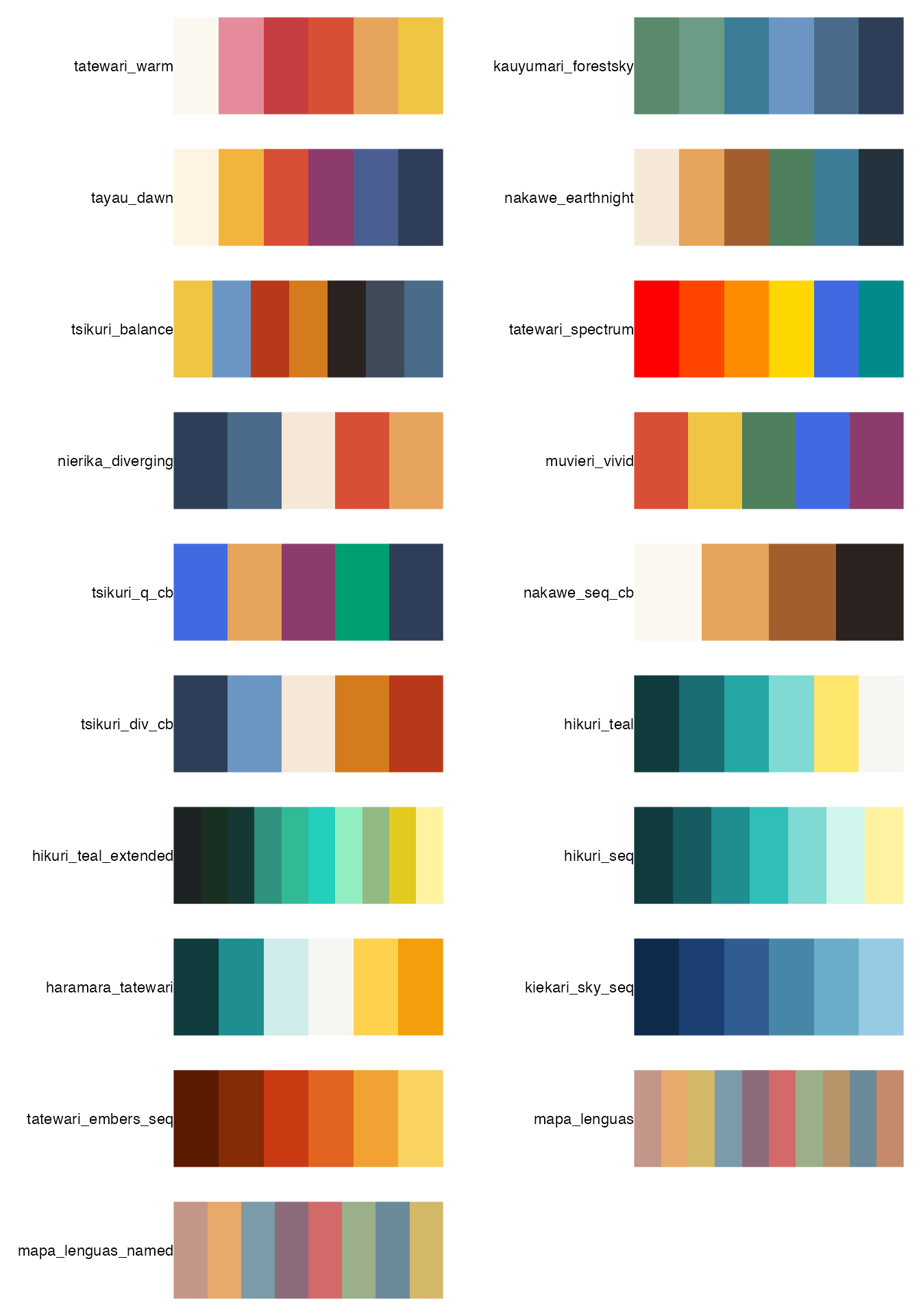
Using a Palette
# Get a palette
colors <- wixarika_pal("tatewari_warm")
colors
#> [1] "#FBF8F0" "#E68B9B" "#C73E42" "#D84F35" "#E7A45D" "#F0C542"

# Use in base R
barplot(1:6, col = colors, main = "Tatewari Warm")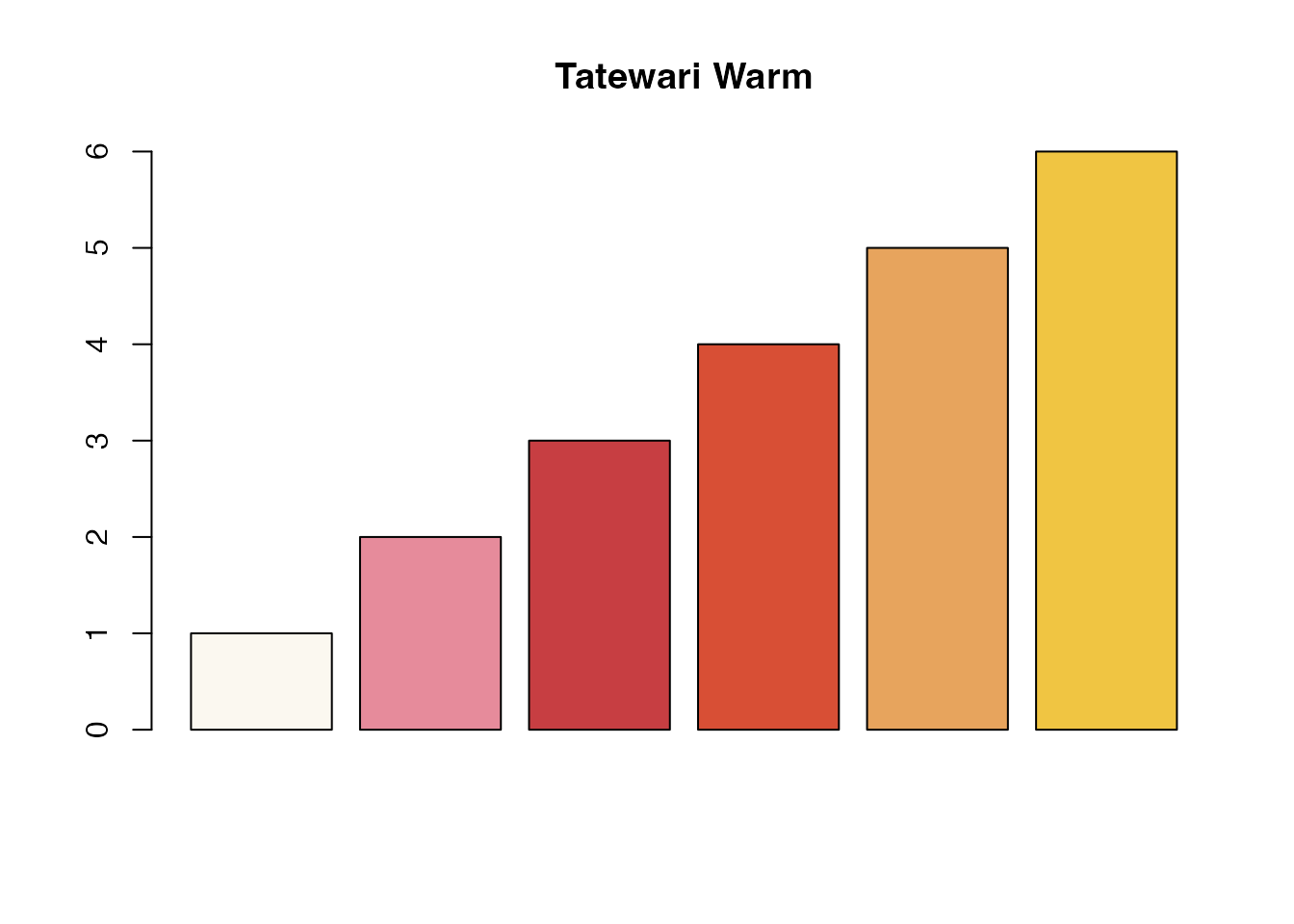
With ggplot2
ggplot(iris, aes(Sepal.Length, Sepal.Width, color = Species)) +
  geom_point(size = 3, alpha = 0.8) +
  scale_color_wixarika("muvieri_vivid") +
  theme_minimal() +
  labs(title = "Iris Dataset with Muvieri Vivid Palette")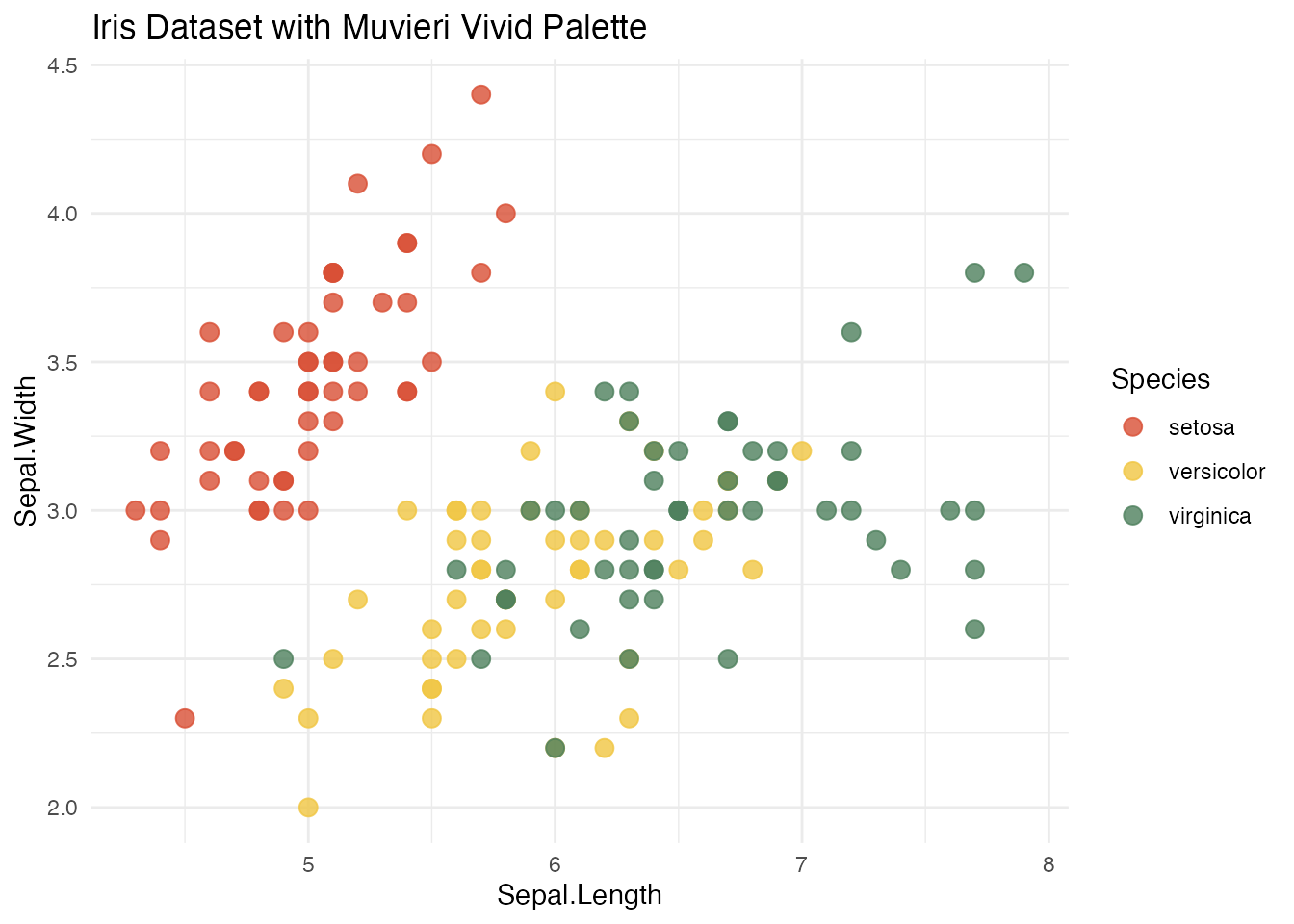
ggplot(faithfuld, aes(waiting, eruptions, fill = density)) +
  geom_raster() +
  scale_fill_wixarika("hikuri_seq", discrete = FALSE) +
  theme_minimal() +
  labs(title = "Old Faithful with Hikuri Sequential Palette")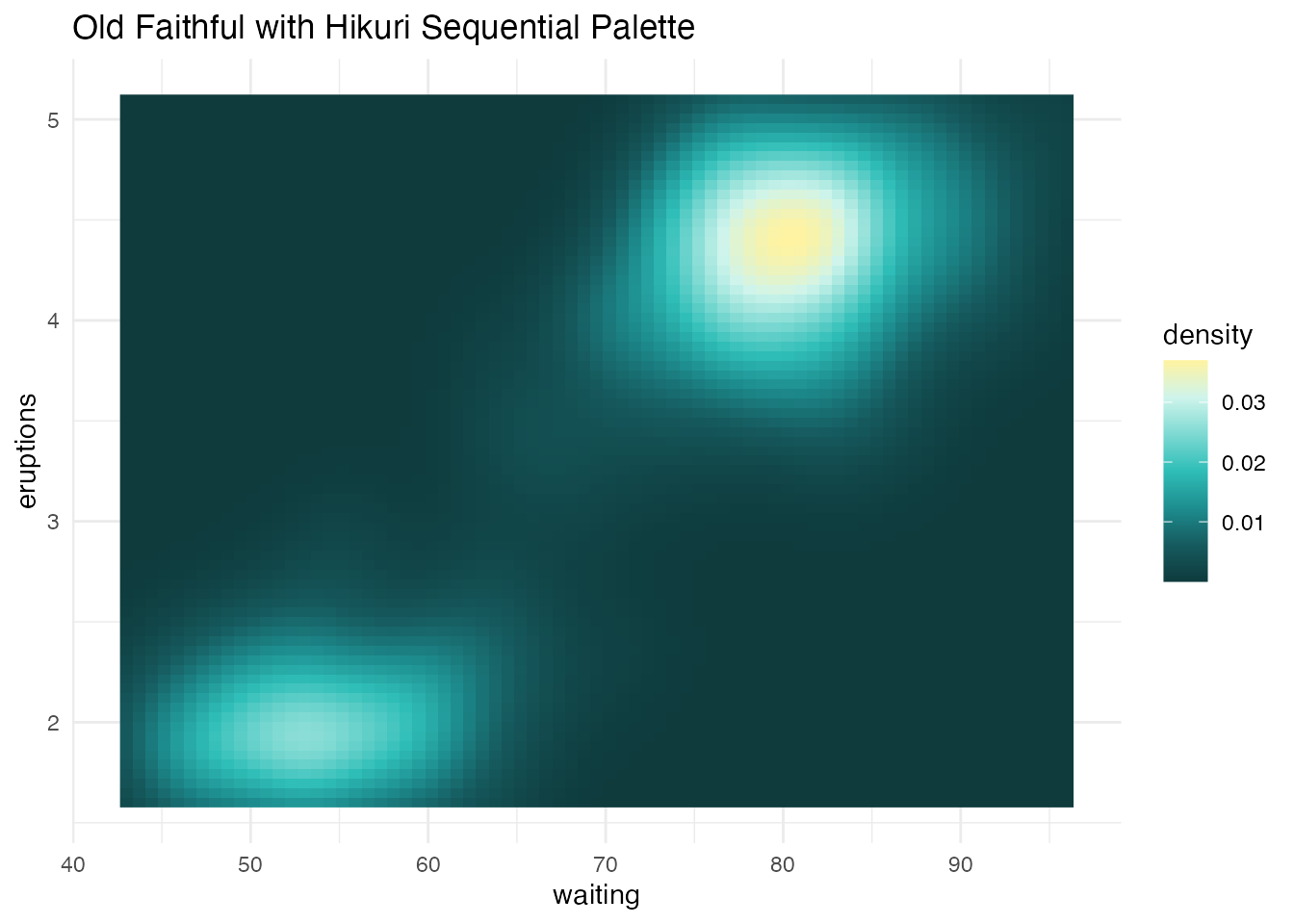
Cultural Context
Each palette is inspired by sacred elements of Wixarika cosmology:
- Tatewari (Grandfather Fire): The first shaman, guide of the Wixarika people
- Kauyumari (Deer Spirit): Sacred messenger between worlds
- Tayau (Father Sun): Source of life and energy
- Nakawe (Grandmother Earth/Ocean): Mother of all life
- Hikuri (Sacred Peyote): Medicine plant central to spiritual practices
- Nierika (Portal): Threshold between physical and spiritual realms
- Tsikuri (Gourd Bowl): Ceremonial vessel used in rituals
- Muvieri (Arrows): Offerings and prayers to the deities
- Haramara: The Pacific Ocean, sacred site of pilgrimage
- Kiekari: The sky and celestial elements
wixarika_pal_info("tatewari_warm")
#>
#> tatewari_warm
#>   Name: Tatewari Warm
#>   Type: sequential
#>   Description: Inspired by Grandfather Fire, with warm reds, oranges, and golds